 Website Audit & Growth Plan, prepared for Garamonds


On 25 November 2026 we audited all 106 addresses on garamonds.com: every page and post in your sitemap, every internal link, the booking path, page speed on a phone, structured data, images, languages and the cookie banner. This is what we found.
The villas are extraordinary and the brand already looks the part. The website around them is a hotel template that was never finished: no price or availability anywhere, a 13-field request form where the booking should be, an 8-second wait on a phone, and demo pages, test pages and placeholder text still published.
You are planning creator and influencer collaborations. Those posts are seen on a phone, and the people who tap through want three answers in seconds: is the villa free on my dates, what does it cost, and can I reserve it now. Today the site answers none of the three. A visitor waits 8 seconds, closes a magazine pop-up, then finds a form that asks for 13 details and promises a reply later. Each of those steps is a place where a visitor can give up, and the campaign pays for every visitor who does.
So the order matters. First a fast site where each villa page shows live dates and prices and takes the booking on your own site. Then the creators, pointed at a page that converts. The build takes one week.
Every "Book Now" and "Check Availability" button ends at /prenotazione-ville/, headed "Send your request". The guest fills in title, first and last name, email, telephone, country (the list starts on Afghanistan), guests, villa, check-in, check-out, contact preference, best time to call and a message, then waits for an answer. None of the six villa pages shows a nightly rate or which dates are open, so a guest cannot even tell whether the house is in their budget before writing to you.
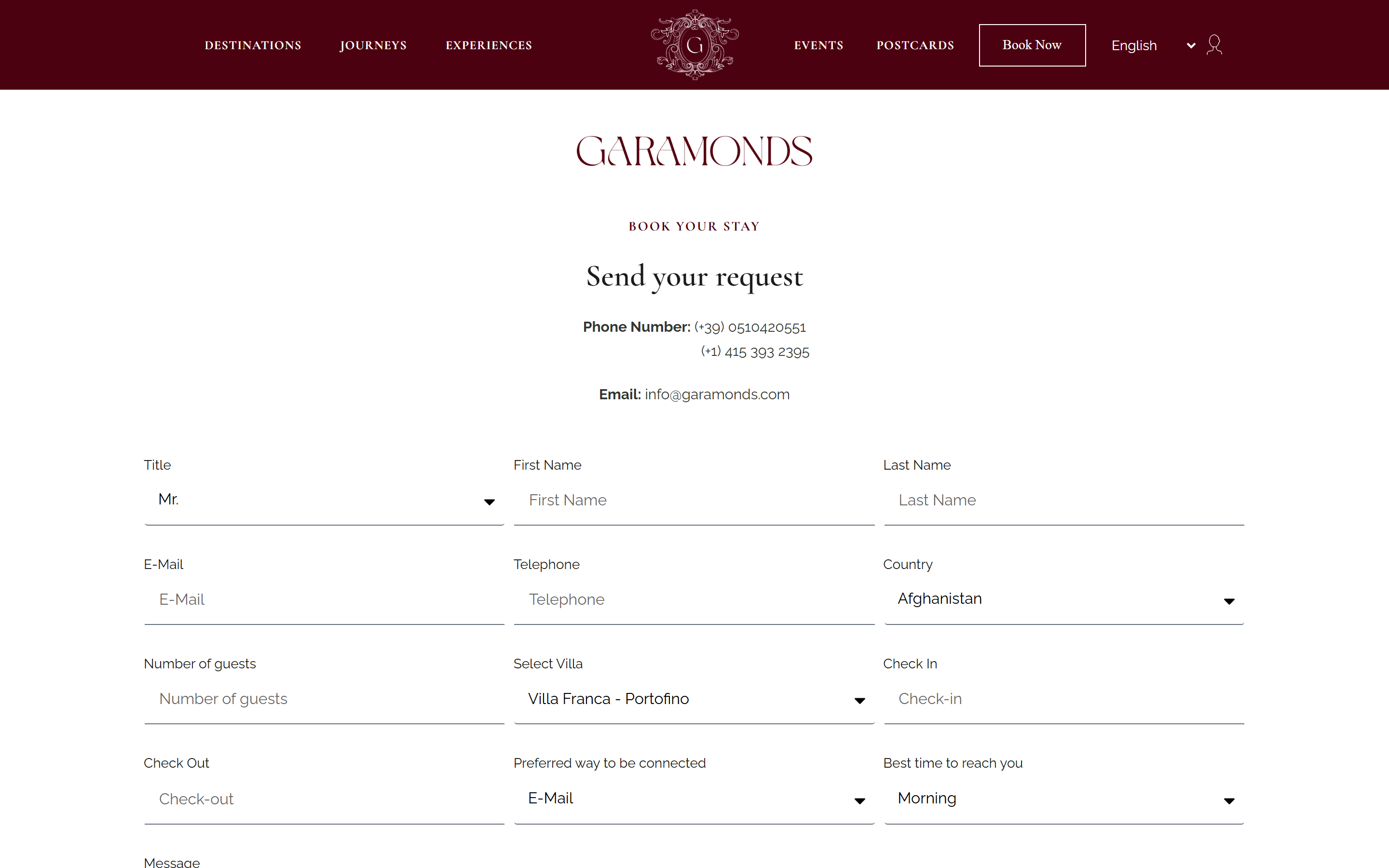
Each villa page gets a booking box with live availability and the full price for the guest's dates, and the guest reserves and pays on your site, connected to the system that holds your calendar and rates. Requests stay available for guests who prefer to talk to someone.
We loaded the homepage as an iPhone would: the main image appeared after 8.3 seconds, after 228 requests and 7.8 MB, including 121 scripts and 70 stylesheets. Google calls 2.5 seconds good. Across our crawl, the median page took 2.4 seconds just to arrive from the server. Creator traffic arrives almost entirely on phones.
A new build on Cloudflare's global network, with images sized for each screen, two self-hosted fonts and no page-builder weight, tuned to Google's Core Web Vitals and tested on a phone before launch.
Speed measured 25 November 2026 with an emulated iPhone 15 on our office connection; your visitors' numbers will vary with their network, the pattern will not.
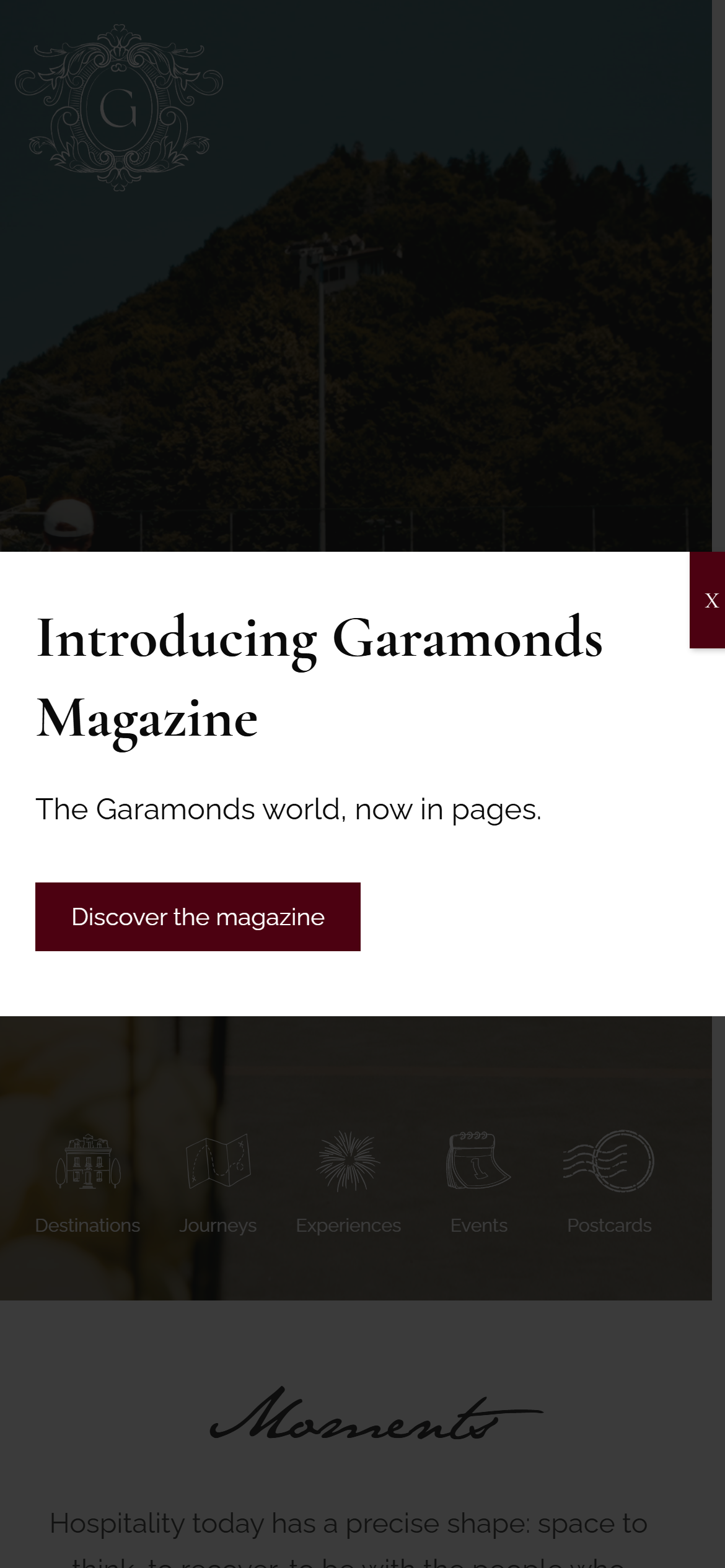
On desktop and on a phone, the first thing a new visitor sees is "Introducing Garamonds Magazine" over a darkened hero. No villa, no price and no booking button are visible until it is closed.
The first screen shows the villas and a way to check dates. The magazine gets its own place in the menu and on the homepage, never in front of the booking.
The Cervia journey reads "Cervia lorem ipsum, step 1, hover per far partire l'itinerario. Lorem ipsum dolor sit amet, lorem ipsum lorem ipsum." It is listed in your sitemap for Google, linked from three pages, and the same text shows on page 2 of the journeys archive.

Every page is rewritten or removed before launch; a check that fails on placeholder text runs on each build.
The Complianz banner is installed, but before anyone clicks it, the site has already set Meta's tracking cookie _fbp and seven sbjs visitor-source cookies, downloaded the Meta pixel, Google Ads, Google Analytics and Tag Manager scripts, and requested fonts from Google's servers six times. The Italian Garante's cookie guidelines of 10 June 2021 allow no profiling cookies before consent, and in January 2022 a Munich court awarded a visitor damages under the GDPR for Google Fonts loaded without consent.
A consent banner that truly blocks Meta, Google Ads and Analytics until the visitor accepts, fonts served from your own domain, and your existing Analytics, Tag Manager, Ads and Meta accounts carried over so no reporting is lost.
The sitemap you give Google lists "Deluxe Hilltop Residence" and "Premier Beachfront Suite" (placeholder shop products; the first says "Our store is in the works and will be launching soon!"), a page called "prova itinerari", two shops (/shop/, /negozio/), two carts (/cart/, /carrello/), three checkout and payment pages and a "conferma prenotazione" page. 11 pages in the sitemap are linked from nowhere on the site.
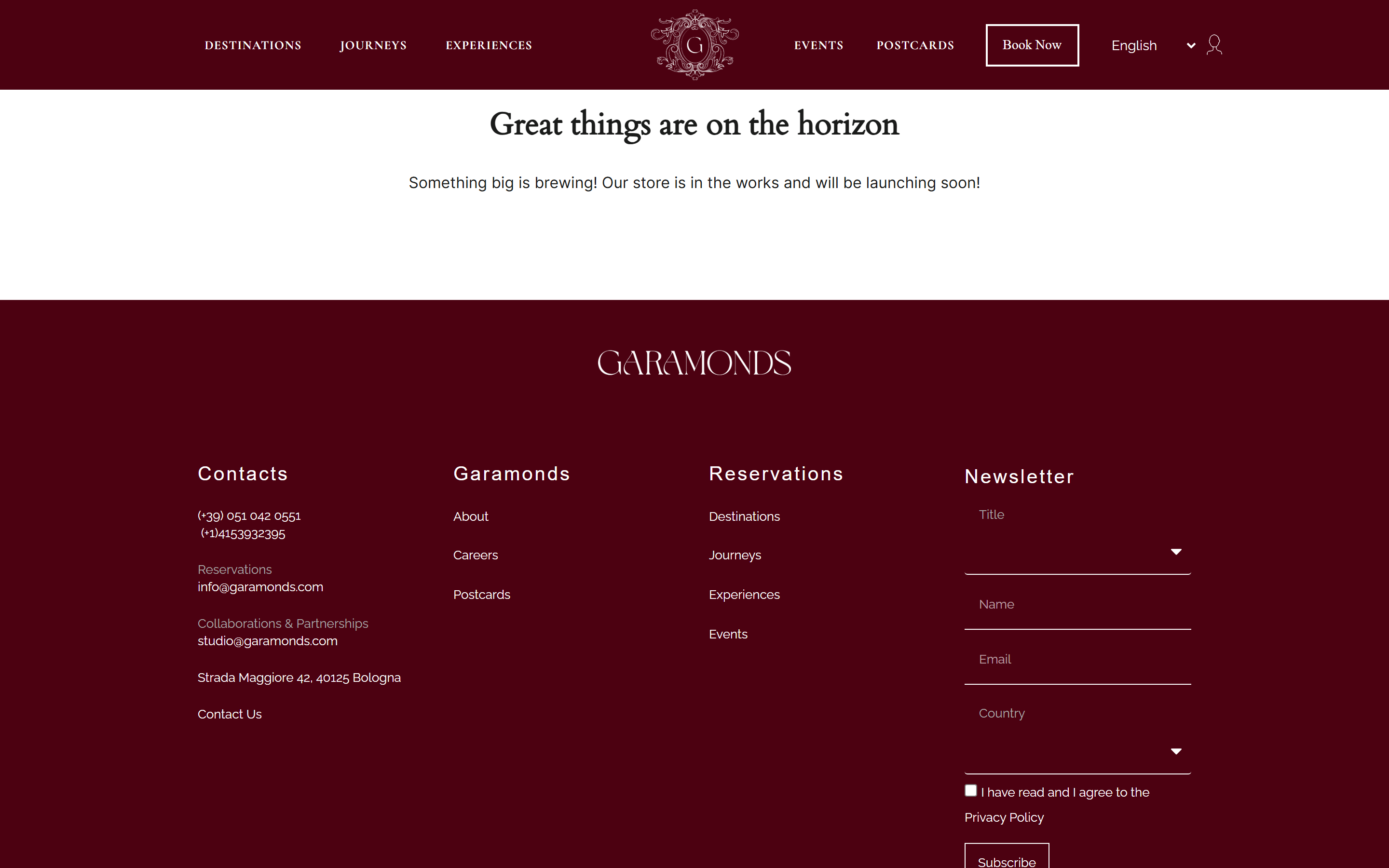
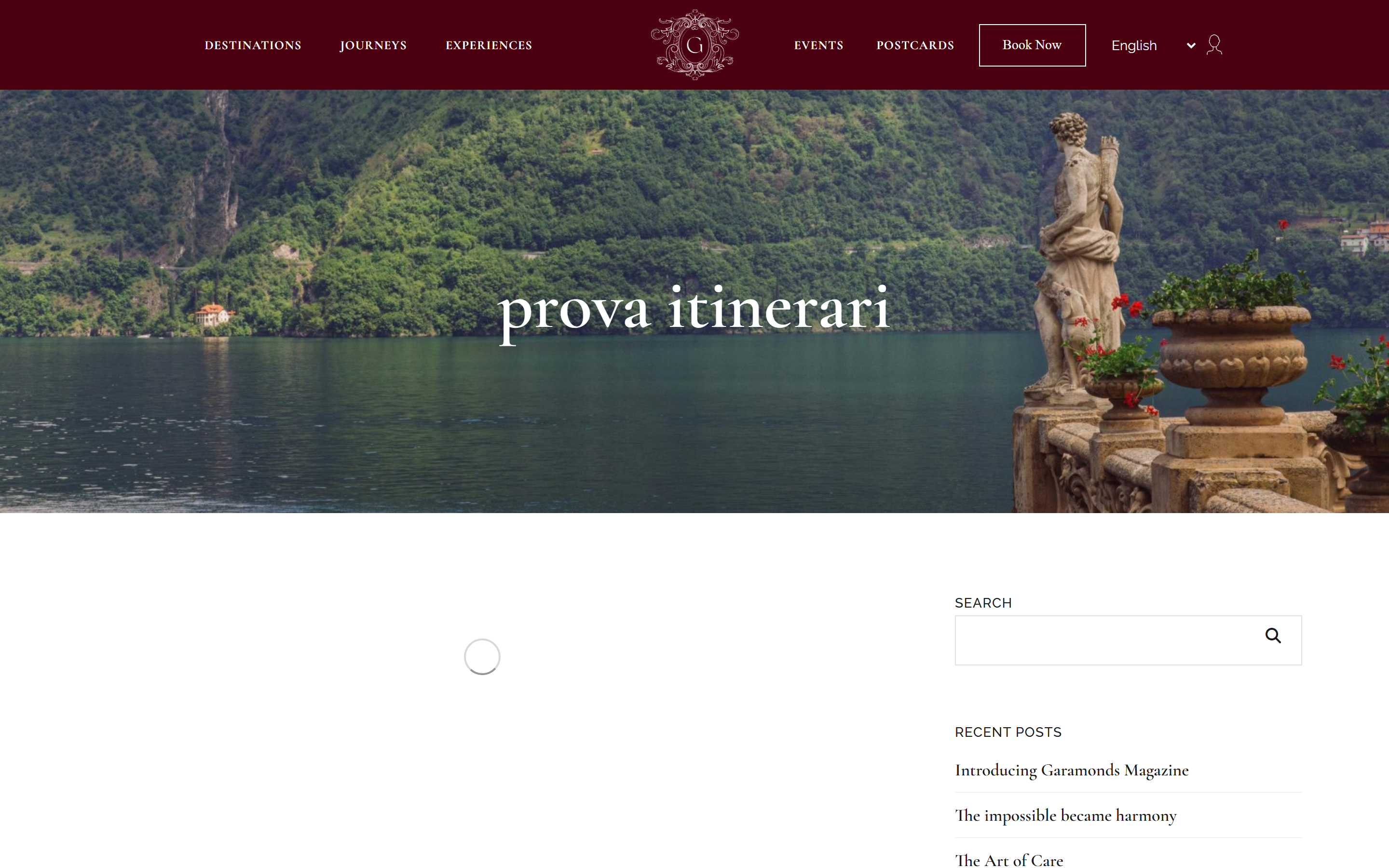
The new site carries only real pages. Every old address that had a purpose is redirected to its new home, so no link anyone saved breaks.
The homepage's "Discover" link goes to /stay/, which does not exist. "From Vineyards to Waterways" is linked from seven pages, including Journeys and all three regional journey pages, and returns a 404 page whose title is in Italian, "Pagina non trovata".
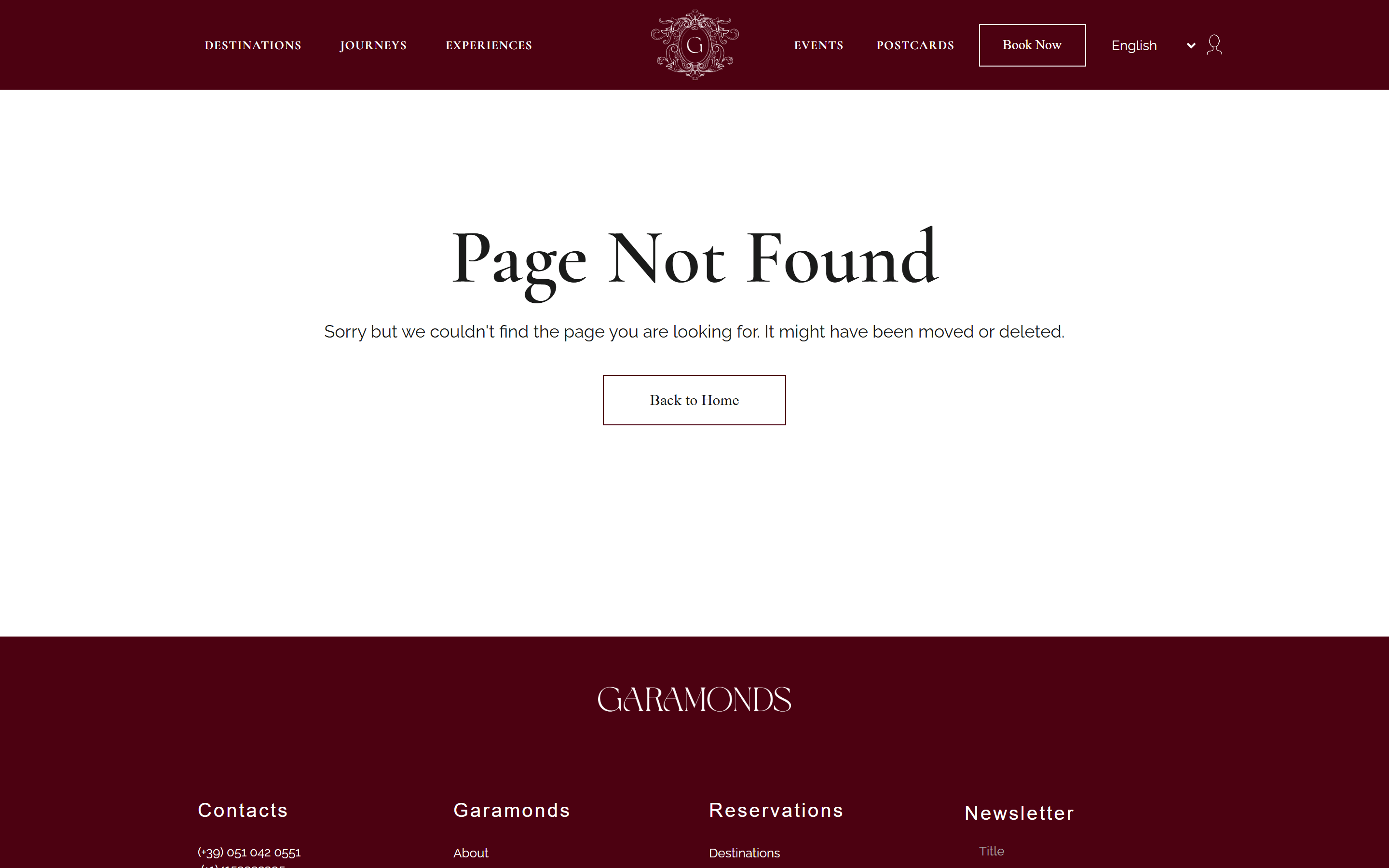
Every link on the new site is checked before launch and on every update, and the 404 page offers the villas and a way to check dates, in the visitor's language.
Villa Franca has two pages, /room/villa-franca/ and /accommodation/villa-franca/, built in two different booking systems. Three journeys have a second "-mobile" copy in the sitemap. Four pages answer both with and without the closing slash. The Villa Jolanda itinerary is published twice, and the page titled "Cesa del Louf" lives at /day-6-7-chalet-dolce-vita/. Google has to guess which copy to rank and splits the credit between them.
One address per villa and per journey, one layout that adapts to every screen, and permanent redirects from every duplicate.
Google writes its own snippet for 56 of the 76 pages in your sitemap because none was given. 24 pages have no main heading (H1), 10 have two and one has seven.
A written title, description and single main heading for every page, matched to what guests search: villa names, "villa with pool Portofino", "private villa Lake Como".
The structured data on every page is the generic default (WebPage, Organization). No villa carries rental markup with its location, bedrooms, guests, amenities or price, which Google and AI assistants such as ChatGPT and Gemini read when they answer "where should we stay on Lake Como".
Vacation-rental and offer markup on every villa page, checked against Google's own requirements, plus the AI-readiness files that let assistants read and cite the site.
84% of the images on the pages in your sitemap have no alt text, so Google Images cannot index them and screen readers announce nothing. For a business sold on its photographs, that is the most visual search channel left empty.
Every photo described in plain words (room, view, villa, place), compressed and sized for each screen.
The language menu uses GTranslate, which translates in the visitor's browser. Search engines see English only: there is no Italian, German or French page for Google to rank, and no hreflang tags to say which language serves which guest.
A real Italian edition, written and reviewed, with its own addresses and hreflang tags. Further languages can be added the same way.
Journey posts are filed under "Senza categoria" (uncategorised), shown above the title; archive titles read "Archivi"; the cart is "Carrello"; the 404 page title is "Pagina non trovata".
Every visible label written in the page's own language.
The Facebook icon on every page points to facebook.com/resteitaly, while Instagram and TikTok are @garamondsworld.
Social links that match the brand, confirmed with you.
When one of these 34 pages is sent on WhatsApp, Messenger or iMessage, the preview shows no picture. Creators and guests share links this way.
A share image and title on every page, a villa photograph for each villa.
Cormorant Garamond, Raleway, Montserrat and Roboto, most in eight weights with italics, all from Google's servers. It adds weight to every page and is part of finding 05.
Two typefaces matched to your brand, served from your own domain.
The homepage title "Villas in Italy, Garamonds Crafted Hospitality" is also used by a theme sample product and an author page; "Speak to an Expert Destinations" is the title of eight addresses.
A unique title for every page.
A Google Ads tag (AW-17750296944) runs on every page. If campaigns are running, each paid click meets the speed, pop-up and booking problems above.
Booking and enquiry events tracked as conversions, so every campaign shows what it earned.
Ranked by what each one costs you in bookings, not by how hard it is to fix.
| No. | Level | Finding | Plan |
|---|---|---|---|
| 01 | Critical | "Book Now" opens a 13-field request form; no price or availability on any villa page | 1 |
| 02 | Critical | 8.3 s to the main image on a phone; 228 requests, 7.8 MB, 121 scripts | 2 |
| 03 | Critical | Magazine pop-up covers the first screen on desktop and phone | 2 |
| 04 | Critical | "Lorem ipsum" placeholder text published on the Cervia journey | 3 |
| 05 | Critical | Meta and visitor-source cookies set, trackers and Google Fonts loaded before consent | 6 |
| 06 | High | Theme demo products, a test page, duplicate shops, carts and checkouts in the sitemap | 3 |
| 07 | High | "Discover" on the homepage and a journey linked from 7 pages lead to a 404 | 3 |
| 08 | High | Villa Franca on two addresses, "-mobile" copies, slash duplicates, a journey published twice | 3 |
| 09 | High | 56 of 76 pages without a description; 35 pages with no H1 or several | 4 |
| 10 | High | No rental structured data on any villa page | 4 |
| 11 | High | 1,085 of 1,291 images (84%) without alt text | 4 |
| 12 | High | Languages only as in-browser translation; English is the only edition Google sees | 5 |
| 13 | Medium | Italian back-office labels on the English site ("Senza categoria", "Archivi") | 3 |
| 14 | Medium | Facebook link goes to facebook.com/resteitaly | 7 |
| 15 | Medium | 34 pages without a share image | 4 |
| 16 | Medium | Four font families, many weights, loaded from Google | 2 |
| 17 | Medium | Same title on several addresses | 4 |
| 18 | Medium | Google Ads tag installed; paid clicks meet the problems above | 1, 6 |
Source: Cavmir crawl of garamonds.com on 25 November 2026 (all 77 sitemap entries plus every internal link they contain, 106 addresses), browser tests on desktop and an emulated iPhone, and a cookie check with a fresh browser before any click on the banner.
Your stories, photographs and brand move across. Everything underneath is rebuilt.
One thing keeps running after launch: Google accepts only about ten indexing requests a day per site, so we submit the most valuable pages first and the rest follow over the next days. That limit is Google's, not ours.
Prices in US dollars, from Cavmir's current price list.
Once each villa page shows its dates and price and takes the booking, creator and influencer collaborations send people somewhere that converts, and every booking traces back to the post that produced it. We scope that programme with you after launch.
A 30-minute call with Dan Ross to walk through this audit on screen, answer your questions on approach and budget, and confirm which system holds your calendar and rates today.